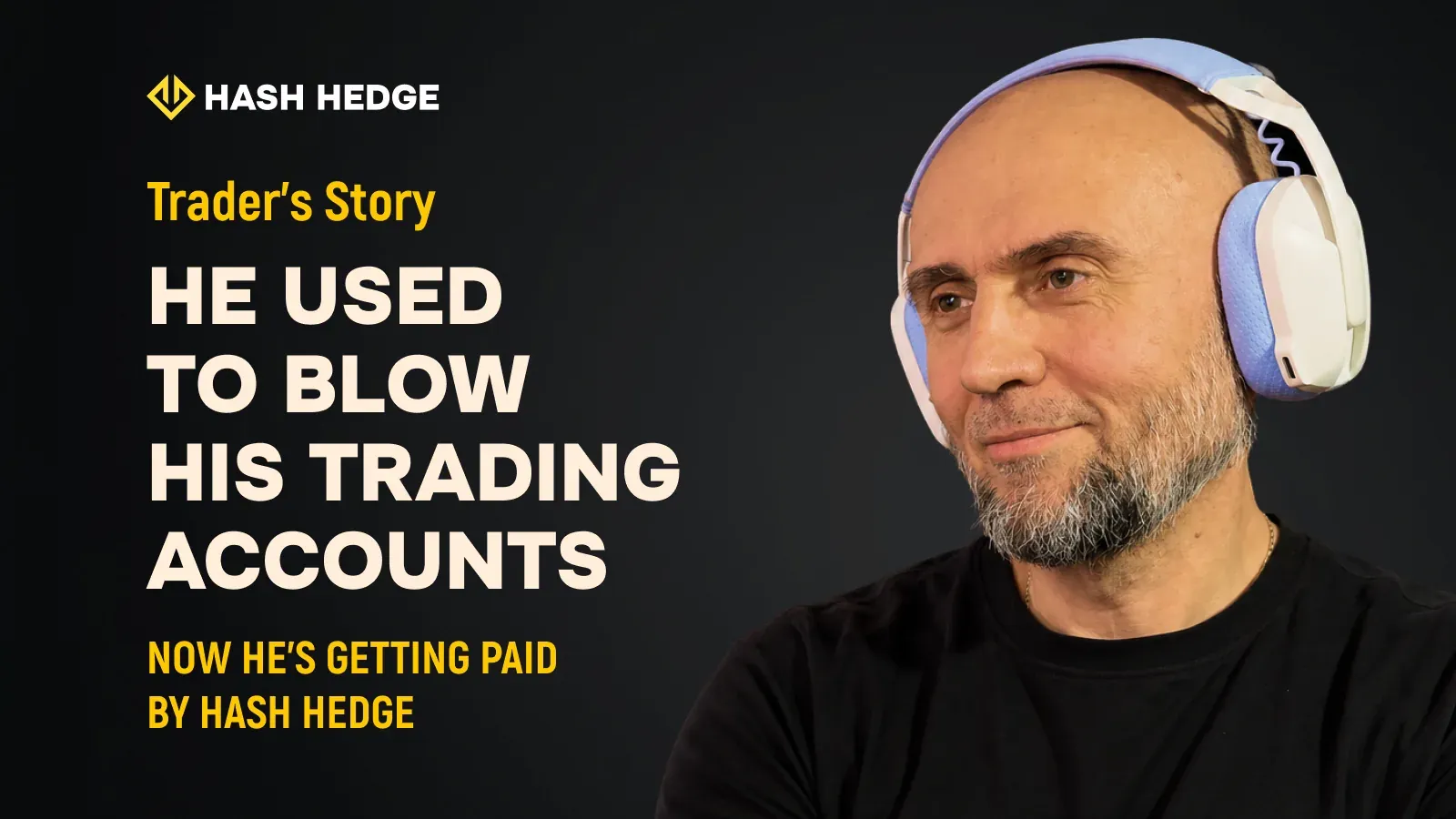
Nearly 30 Years in the Markets, but “Not a Trader”
Yuri first invested in stocks back in 1996. At the time, buying shares meant visiting a brokerage office in person and paying cash.
He didn’t receive confirmation of his trade until four days later, when it arrived by mail.
Since then, Yuri has traded a wide range of assets, including stocks, gold, oil, the Australian dollar, and the Japanese yen. Today, his portfolio also includes Bitcoin and Monero.
Despite nearly 30 years of experience, Yuri doesn’t consider himself a professional trader.
His main career is in IT and business consulting. He works with American companies and trades financial markets alongside his regular job.
Yuri is almost 50 and has three children. There’s more to his life than work and trading. His wife, for example, started painting at 50, and her artwork is now featured in exhibitions.
To Yuri, a professional trader is someone who can make money from price movements regardless of market direction or the asset being traded.
He points to a university friend who has supported himself entirely through trading for the past 30 years.
That friend taught him an important rule:
“If you’re not a professional trader, only buy assets you’d be willing to leave to your children.”
Yuri follows this principle when choosing assets, including gold, oil, Bitcoin, and Monero.
But having decades of market experience doesn’t mean he’s been consistently profitable.
About six or seven years ago, he went through a stretch of two to three consecutive years of trading losses.
One of his most painful experiences came from trading gold.
Losing $10,000 on Gold and Trying to Win It Back
Yuri describes his experience trading gold on Forex as one of the toughest periods of his trading career.
At the time, he had around $10,000. For a family with three school-age children, that was a significant amount of money.
He opened a gold position and started averaging down, increasing his position size as the market moved against him.
Then came a Federal Reserve meeting.
The market shifted sharply, and within a few days, Yuri had lost his entire $10,000 trading account. But the losses didn’t stop there.
Determined to recover the money, he took funds set aside for everyday family expenses and started trading again.
“I spent two days trying to win it back. I ended up losing that money too.”
Yuri remembers this as one of the hardest experiences of his trading career.
He was caught in what traders call tilt: a state where emotions take over, and the urge to recover losses becomes stronger than rational decision-making.
Over time, he changed the way he thinks about losses.
When something goes wrong, Yuri tries to ask himself a different question. Instead of “Why did this happen?” he asks, “What was I supposed to learn from this?”
He says those experiences taught him to approach risk more calmly. Today, he no longer feels the same fear before opening a trade, but he hasn’t forgotten what emotional decisions can cost.
The biggest lesson he took away was simple:
Never trade with borrowed money or money that belongs to someone else.
Still, he wasn’t able to avoid major losses entirely.
His most recent significant loss came last summer, when he lost $5,000 trading Monero with his own capital.
That experience led him to try prop trading, where he could trade with capital under clearly defined risk limits.
But he didn’t abandon his Monero strategy.
Instead, it became the foundation of his trading at Hash Hedge.
Trading with Hash Hedge: 3 Payouts
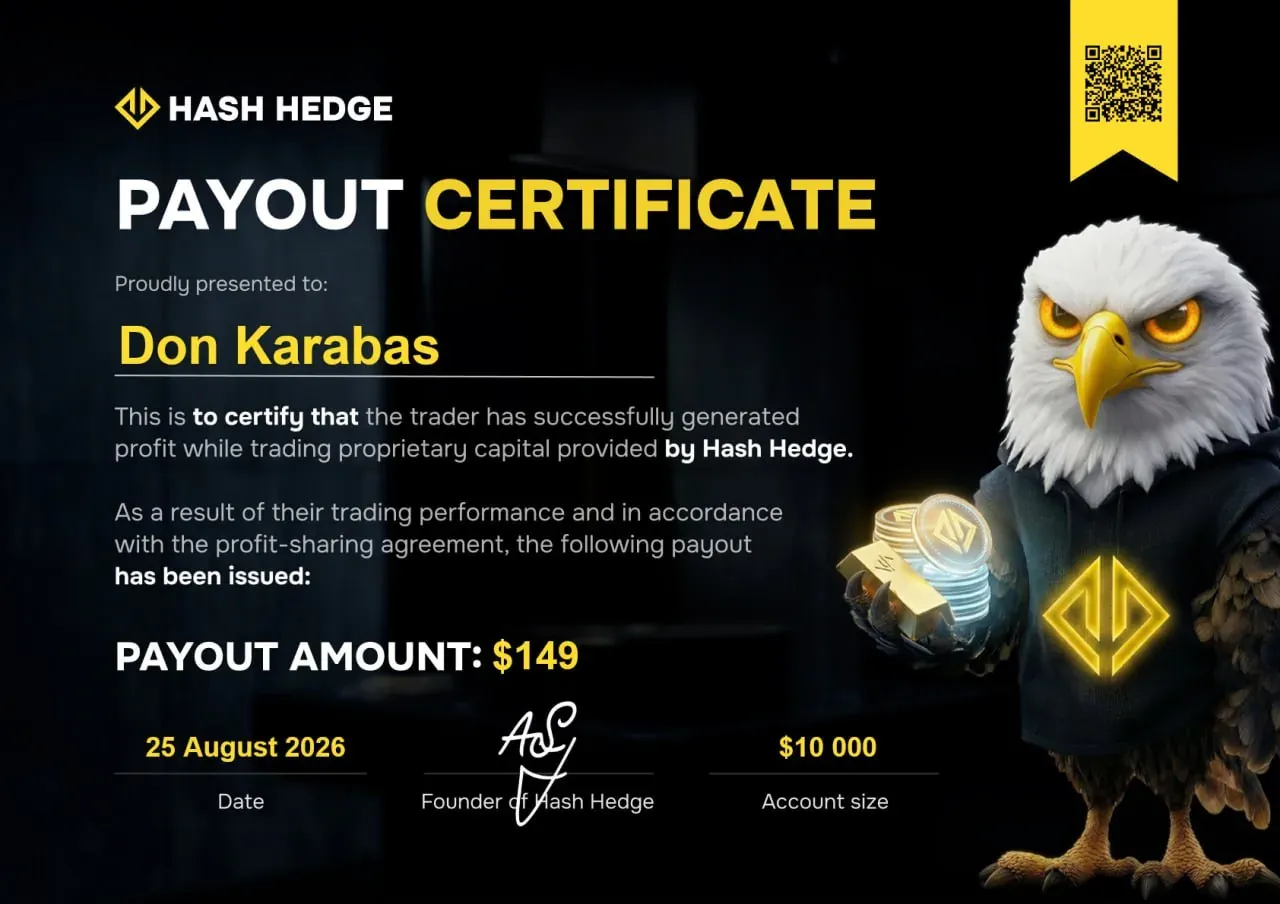
Yuri started with a $10,000 Challenge at Hash Hedge, passed it, and received a Funded Account.
Since then, he’s received 3 payouts totaling $914:
- $149 – First payout
- $624 – Second payout
- $141 – Third payout
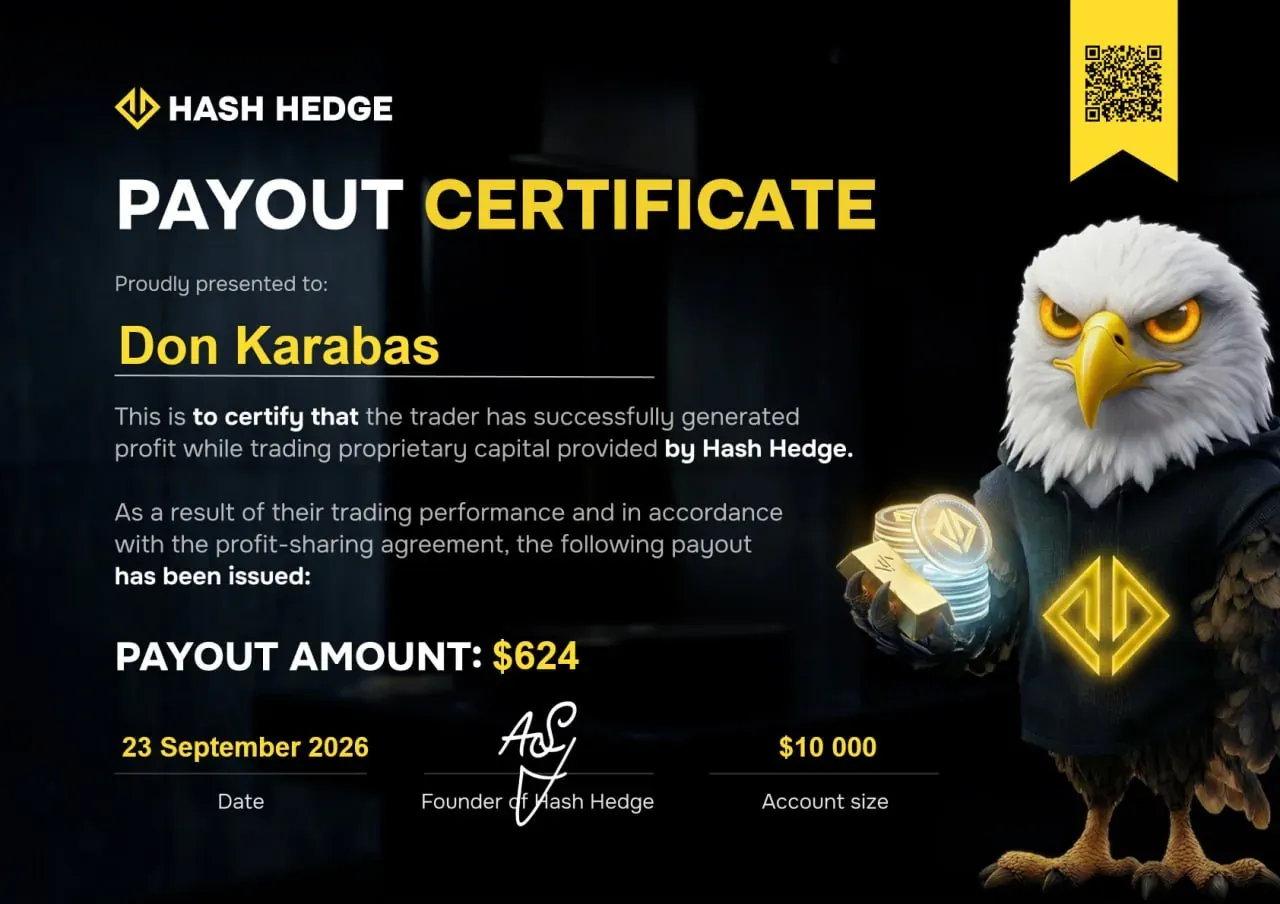
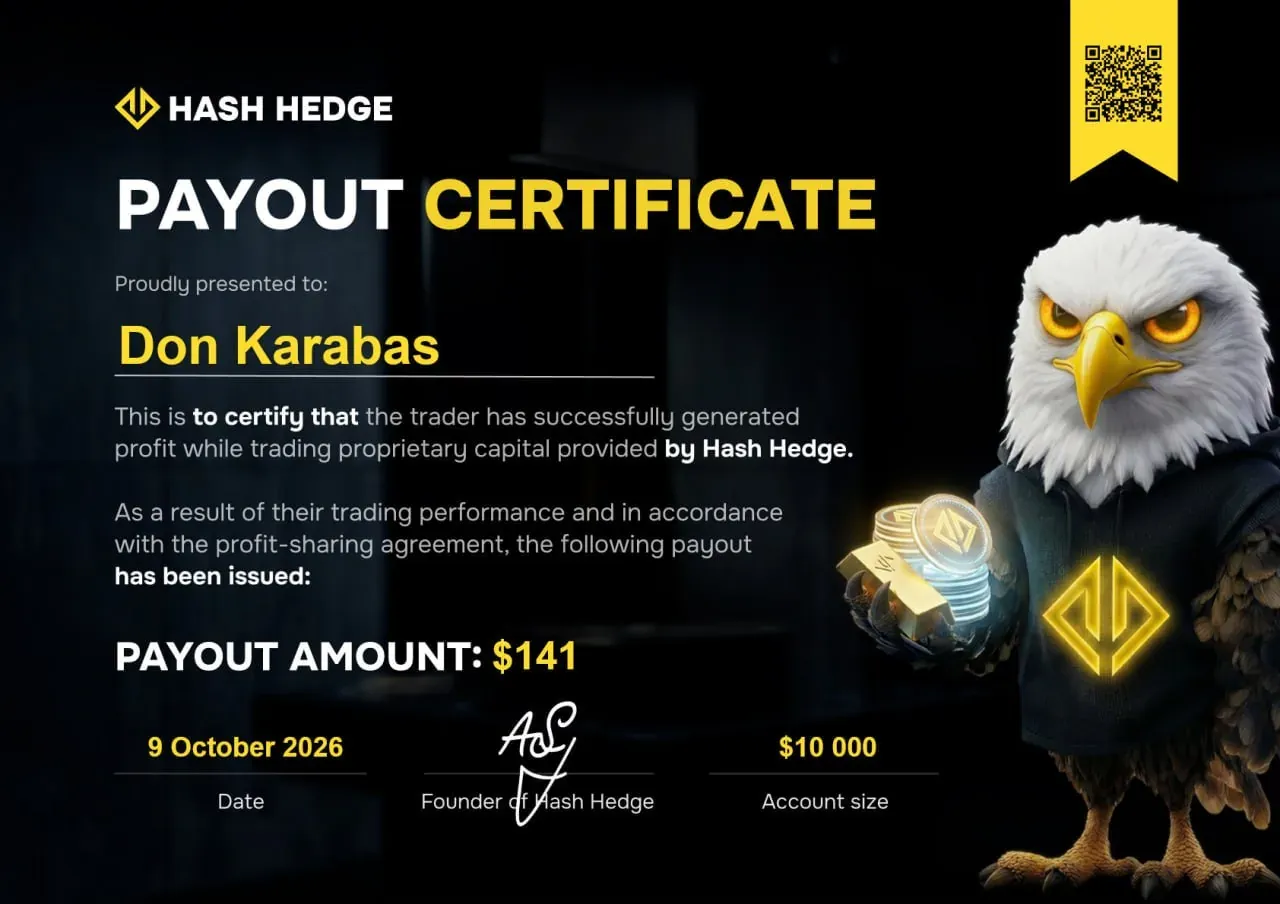
In addition to his main account, Yuri has several other Challenges:
- 2 × $5,000 accounts
- 2 × $10,000 accounts
- 1 × $1,000 account
Yuri says he chose Hash Hedge for several reasons. Stop Loss orders work as expected, trades execute quickly, and he hasn’t experienced any technical issues.
There are four things he particularly likes about the platform.
1. Cashback on purchases
A portion of what traders spend on Challenges comes back as HH Coins. These coins can cover up to 100% of future Challenge purchases.
2. More markets to trade
In addition to cryptocurrencies, Hash Hedge now offers gold and oil, two markets Yuri already has experience trading.
3. Continuous platform improvements
Yuri appreciates the regular updates, special promotions, and cashback offers available to traders.
4. The ability to trade larger Monero positions
The available XMR position limits allow him to run his grid trading strategy on larger accounts.
After receiving more payouts, Yuri plans to increase his trading capital and move up to $100,000 accounts.
Grid Trading Monero: How It Works
Yuri’s strategy is built around grid trading within a defined price range.
He places multiple limit buy and sell orders at fixed price intervals, aiming to profit from the market’s back-and-forth movements.
For this approach, he looks for assets that tend to stay within relatively stable trading ranges for extended periods.
He considers Bitcoin, Ethereum, and Solana less suitable for his strategy because of their sharp movements on the daily chart.
Monero (XMR), on the other hand, has shown more of the range-bound price action he looks for since 2023.
As an example, Yuri points to a trading range that formed on September 21.
At the time of the interview, Monero had been trading between $534 and $581 for roughly three weeks.
Within that range, he set up:
- A buy grid between $535 and $545, with orders spaced $1 apart.
- A sell grid at higher price levels.
- 10 limit buy orders, each with the same position size.
This meant his buying zone covered approximately 2% of XMR’s price.
“When price drops toward the bottom of the range, buy in $1 increments. When it bounces 2%, sell using the same grid approach.”
Yuri increases his position sizes gradually.
He might start with orders for 1 XMR, increase to 2 XMR after a week, and eventually move to 3 XMR if his risk limits allow it.
At the time of the interview, he said the strategy had been profitable for three or four consecutive days.
Yuri primarily trades long positions and rarely shorts the market.
That decision comes from experience.
He once shorted Bitcoin while its price was climbing from $2,000 to $6,500 and eventually closed the position at a loss.
How to Know When a Trading Range Has Stabilized
One of the hardest parts of grid trading is knowing when a price range has actually formed and when it’s safe to start placing orders.
To make that decision, Yuri looks beyond Monero’s price chart.
He also monitors two important derivatives market indicators:
- Open Interest (OI)
- Funding Rates
These help him understand market participation and whether positioning is becoming heavily skewed toward longs or shorts.
At the time of the interview, Yuri estimated that total Monero open interest across exchanges was around $150–200 million.
When open interest or funding rates change sharply, he prefers to stay out of the market.
Instead, he waits for volatility to settle and for price to test the boundaries of a potential range several times.
Yuri also uses AI to gather market information.
About once every three days, he asks for updated open interest and funding rate data.
But he doesn’t treat AI responses as trading signals.
“It’s not about doing whatever the chatbot tells you. But where else can I quickly pull together information on open interest and funding rates?”
One example came during a sharp Bitcoin rally.
Monero broke above its previous trading range while open interest and funding rates started rising.
Yuri stopped trading completely because the market no longer met his strategy’s conditions.
He waited for volatility to decline, for price to move between the new boundaries several times, and for derivatives market indicators to stabilize.
Only then did he identify new zones for his grid orders.
What to Do When Price Breaks Out of the Range
Yuri’s response depends on which direction the market breaks.
- If price breaks above the range, his buy orders may stop getting filled. Rather than chasing the move, he waits for a new range to form.
- If price breaks below the range, things become more complicated. Existing long positions can move into a loss.
That’s where his risk management rules come in.
When his daily drawdown reaches around 1–2%, Yuri starts reducing his exposure, closing approximately 20% of the position at a time.
If price continues moving against him, he may close the entire position at a loss and stop trading until a new range forms.
He’s willing to wait a month or even two for the right conditions.
Monero isn’t the only asset he trades, and his monthly return target is only around 1%.
That means he doesn’t feel pressure to open trades when the market isn’t giving him the setup he wants.
Why Monero?
Monero is one of Yuri’s favorite assets, and not just because of its price action.
He points to several characteristics of XMR:
- Its long history in the crypto market.
- The privacy of its transactions.
- Its use as a means of payment.
Yuri believes Monero doesn’t have a single large holder capable of controlling the market. He also thinks demand for private transactions helps maintain interest in the asset.
Of course, none of these characteristics guarantees price stability or prevents sharp market moves.
Yuri has also noticed a recurring pattern in XMR’s price action.
During the four weeks leading up to the interview, he observed that Monero tended to decline on Fridays, particularly toward the close of the U.S. trading session.
The price would then recover over the weekend and move back into its trading range by Monday.
During that period, he observed price swings of approximately 2–4%, within a broader trading range of around 5–6%.
For comparison, Bitcoin can sometimes move 10% or more over relatively short periods.
However, Yuri recognizes that these observations reflect a specific period, not a reliable pattern that traders can expect to repeat indefinitely.
He also emphasizes that choosing what to trade is a personal decision.
Some traders prefer cryptocurrencies. Others are more comfortable trading gold, oil, or even meme coins.
Gold and Oil: A Different Approach
In addition to Monero, Yuri trades gold and oil on Hash Hedge.
But he uses a different strategy for these markets.
Instead of placing grid orders, he trades around the boundaries of established price ranges and pays more attention to fundamental factors.
For example, when analyzing gold, Yuri closely watches U.S. Treasury yields:
- 2-year Treasury yields, which are particularly sensitive to expectations about Federal Reserve interest rate decisions.
- 10-year and 30-year Treasury yields, which reflect longer-term expectations about inflation, interest rates, and other economic factors.
One situation he pays attention to is when short-term Treasury yields remain relatively stable while longer-term yields rise.
He sees this as a potential sign of changing inflation expectations and factors it into his gold analysis.
However, rising Treasury yields don’t automatically mean gold prices will increase.
Yuri believes trading gold requires a deeper understanding of fundamental market drivers than his Monero grid strategy.
But he doesn’t rely on fundamental analysis alone.
He believes trading algorithms play a significant role in today’s financial markets, so he also uses technical analysis tools, including:
- Support and resistance levels
- Trendlines
- Fibonacci retracement levels
Trading gold and oil also allows him to spread his trading activity across different markets.
When Monero isn’t offering a suitable trading range, Yuri can look for opportunities elsewhere rather than forcing his grid strategy to work in unfavorable conditions.
Why 1% a Month and Keeping the Account Alive Matter Most
Yuri’s most important trading principle is simple:
Keep the account alive for as long as possible.
He’s comfortable finishing a month without making a profit.
What he doesn’t want is to lose his Funded Account by taking unnecessary risks.
“If I had to choose between making 30% and losing my account, or withdrawing 1% a month for two years, I’d choose the second option without hesitation. As long as the account stays alive, I’ll have money to put food on the table.”
Yuri says losing an account bothers him much more than going a month without a payout.
He also has more respect for traders who receive payouts consistently than for those who make one big profit.
To him, the fifth, seventh, or tenth payout says much more about a trader than a single impressive result.
That’s where he sees the real value of prop trading: consistency over time.
Moving to Funded Accounts changed more than Yuri’s risk management.
It changed his entire relationship with trading.
Previously, when trading with his own capital, Yuri regularly used 10x leverage, sometimes increasing it to 20–25x.
His goal was to earn $2,000–$3,000 every month.
But with a $20,000 trading account, even making $2,000 required a 10% monthly return.
According to Yuri, that target created constant psychological pressure and pushed him toward taking bigger risks.
Today, his approach is much more conservative.
He generally risks around 1% per trade and uses relatively low leverage.
He also says his monthly returns have exceeded 1% in each of the past three months.
But the biggest change isn’t reflected in his trading results.
It’s how he feels.
Yuri no longer wakes up in the middle of the night to check charts.
And he doesn’t worry if he goes several weeks without opening a trade.
If Monero hasn’t established a suitable trading range, he simply waits.
Not trading no longer feels like missing an opportunity.
He believes his experience trading Funded Accounts will help him maintain the same discipline when managing his own capital.
Over the years, Yuri has developed another personal rule:
If he catches himself wanting to earn a specific percentage by a specific date, that’s a sign to stop and reconsider his decisions.
He believes rigid profit targets can encourage emotional trading and unnecessary risk-taking.
Still, trading isn’t just about making money for Yuri.
He genuinely enjoys analyzing financial markets.
Trading gold and oil also gives him a way to test his understanding of economic events and how they affect asset prices.
For traders who are just getting started, Yuri recommends taking a gradual approach to increasing trading capital.
He believes it’s better to start with a smaller Challenge, such as $10,000, learn to follow the rules, and build consistent results.
Only then should a trader consider moving to larger accounts.
His main advice is to trade only what you understand, make your own decisions, and never chase profits at any cost.
For Yuri, the biggest benefit of prop trading is learning how to keep a trading account alive.
And that skill is worth more to him than any single large profit.
Key Takeaways
1. Keeping Your Account Alive Matters More Than Chasing High Returns
Yuri aims for approximately 1% profit per month and prefers consistent payouts over trying to grow his capital as quickly as possible.
His priority is following the rules and staying in the market for the long run.
2. Grid Trading Only Works Under the Right Market Conditions
Yuri uses his Monero grid strategy when price is moving within an established trading range.
To evaluate market conditions, he monitors open interest, funding rates, and price action.
If the range breaks or the market becomes unstable, he prefers to wait for a new setup rather than force a trade.
3. Prop Trading Changed His Approach to Risk
Yuri previously used leverage as high as 20–25x and aimed to make $2,000–$3,000 per month trading his own capital.
Today, he limits his risk to approximately 1% per trade, uses lower leverage, and doesn’t feel the need to trade every day.
At Hash Hedge, this approach has already earned him 3 payouts totaling $914.
4. Managing Emotions Matters More Than Winning Back Losses
Losing $10,000 trading gold, followed by additional losses, taught Yuri never to trade with borrowed money or funds needed for family expenses.
He now avoids rigid profit targets and believes knowing when to stop trading and protect his capital is more important than any individual trade.