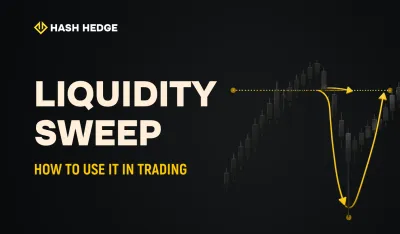
What Is Liquidity and Why It Moves the Market
Simply put, liquidity is the ability to buy or sell an asset quickly without causing a major price impact. Where liquidity is high, price moves smoothly. Where it’s thin, even moderate orders can trigger sharp moves.
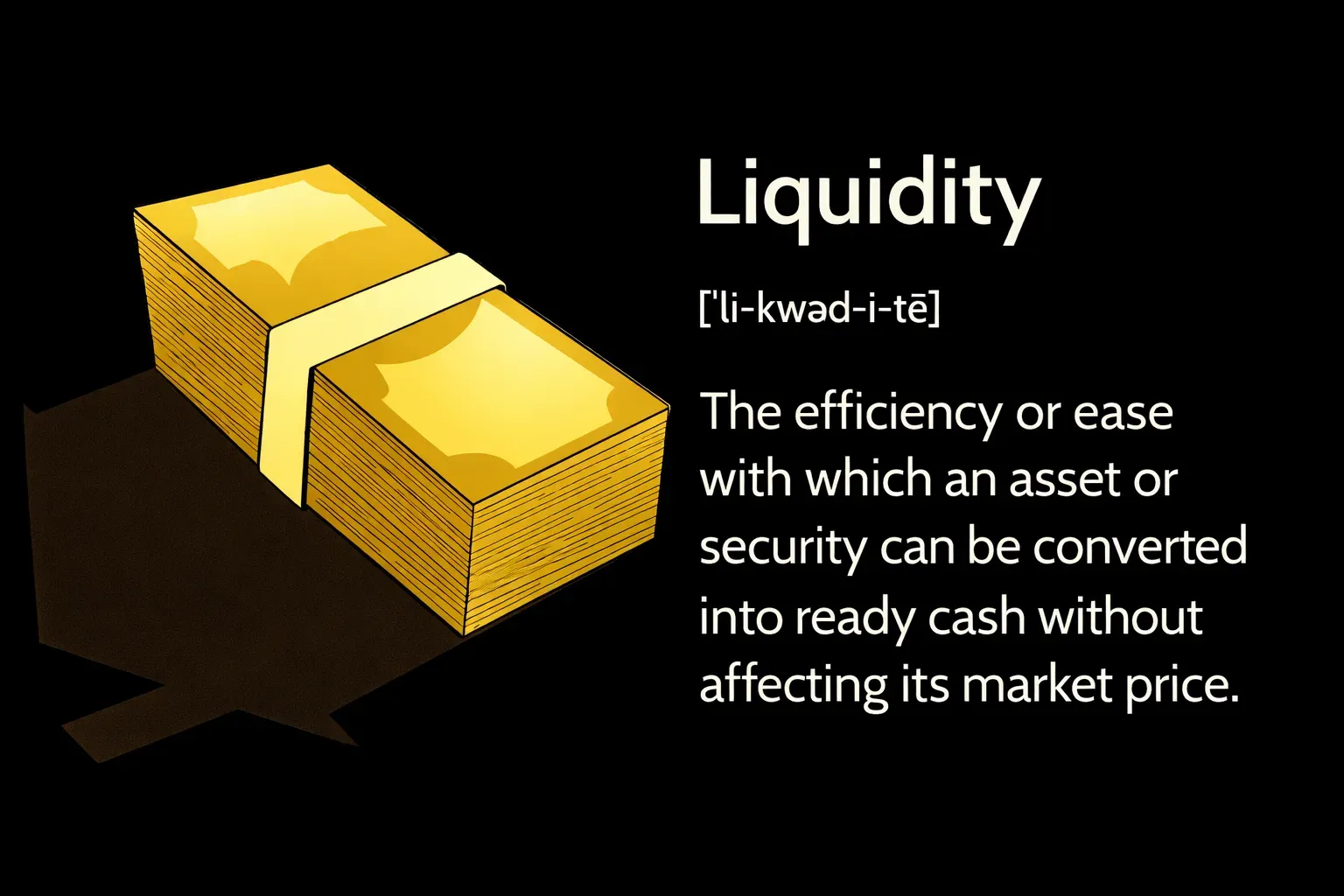
In trading, what matters most is not liquidity in general, but where exactly it sits. Large clusters of orders, stop losses, pending entries, all of this forms what traders call liquidity zones. These are areas where market interest is concentrated and where price tends to react.
In crypto, liquidity zones often form around:
- Obvious highs and lows.
- Round numbers.
- Consolidation ranges.
- Local trading ranges.
Price is drawn to these areas because that’s where volume can be absorbed.
For a funded trader, this completely changes how the market looks. Price stops feeling random and starts looking like a tool that searches for liquidity.
How Liquidity Zones Are Formed
Liquidity zones don’t appear by accident. They are created by trader behavior. Every time participants place stop losses, limit orders, or wait for a breakout, they build an area where volume accumulates. For large players, that’s a signal: liquidity is here, it’s worth coming here.
The most common places where liquidity builds up are:
- Equal highs and lows.
- Post-consolidation ranges.
- “Clean” levels everyone sees.
- Areas where the market paused before a strong move.
The problem is that most traders use the same references. Some place stops behind highs, others wait for breakouts, others enter on retests. The result is too much interest in one place. And the market often goes there not to continue the trend, but to collect that liquidity.
That’s why you so often see price:
- Break a level cleanly and immediately reverse.
- Run stops and return into the range.
- Show a fake impulse before the real move starts.
For traders who don’t understand liquidity, this looks like market manipulation. For those who do, it’s normal market behavior.
In crypto prop trading, this hurts even more. Moves are sharp, reactions are fast, and recovery is limited by rules. A few stop runs in a row, and you’re already close to the daily limit.
That’s why working with liquidity is mainly about understanding where the market will look for volume and not being the one supplying it.
Liquidity and Stop Losses: Why Obvious Spots Are Dangerous
One of the most frustrating situations is when price perfectly tags your stop and then moves in your direction. From a liquidity perspective, that’s not bad luck.
Stop losses are ready-made liquidity. They are market orders waiting to be triggered. For large players, they’re a convenient source of volume. That’s why obvious stop placements, behind highs, lows, or range boundaries, become targets.
Crypto moves fast, and stop clusters are hit aggressively. Price can spike through a level, collect orders, and snap back. To an unprepared trader, this feels like manipulation. In reality, it’s standard liquidity behavior.
In funded trading, this is crucial. Every stop run brings you closer to the limit. A series of these can quickly violate the rules. That’s why the goal isn’t just to place a stop, it’s to understand how obvious it is to the market.
This doesn’t mean trading without stops. It means not standing with the crowd in the most predictable places.
How Liquidity Drives Impulses and Reversals
Some traders believe strong moves start because of news or external events. Sometimes that’s true. But very often, the market moves simply because it reached liquidity.
Markets don’t like empty space. When price sits in a range, traders build positions, stops stack at the edges, pressure builds and eventually the market makes a sharp move. Many see this as a trend continuation. In reality, it’s often just liquidity collection.
A typical scenario looks like this: price ranges tightly, traders accumulate positions, stops pile up at the edges, tension builds then a sharp move clears those orders. Only after that does real direction start to form.
In crypto prop trading, this is critical. Moves are fast, reactions are short, and price can run and reverse within seconds. If you can’t tell whether it’s a real move or just liquidity being collected, you’ll keep ending up on the wrong side.
That’s why liquidity zones are not levels — they’re targets. They show where the market is likely to go to find volume. Once you see price this way, your entries, expectations, and understanding of market behavior change completely.
Liquidity and Market Structure: A Different Way to Read Price
When you start viewing the market through liquidity, structure stops being just highs and lows. It becomes a map of interests, where:
- Some participants defend positions.
- Others look for entries.
- Others collect volume.
Liquidity zones fit into this naturally. They explain why price moves where it does and why logical levels sometimes fail.
For a trader working with company capital, this is especially valuable. You stop taking moves personally. The market becomes easier to read, and your decisions become more scenario-based.
What This Means for Funded Traders
In personal trading, you can afford mistakes. In prop trading, you can’t. Every decision matters. Every stop is a step toward the limit. Every impulsive trade puts the account at risk.
Liquidity zones help you:
- Reduce random entries.
- Filter setups better.
- Avoid obvious traps.
- Handle stop runs calmly.
In funded accounts, this is critical because rules don’t change with market conditions. The market can be wild, news-driven, chaotic but limits stay the same.
Understanding liquidity becomes a survival tool in the prop model.
Common Mistakes When Working with Liquidity
Liquidity can easily be misunderstood. Traders start trying to predict every stop run, catch every move, enter early, exit late. Some trade against every impulse. Others chase every spike.
At that point, liquidity stops being a tool and becomes a source of stress. The trader starts fighting the market instead of reading it. Every move feels like a trap. Every loss feels personal.
Once you stop hunting liquidity and start accepting it as part of structure, trading becomes calmer. Fewer unnecessary entries. More patience. Liquidity starts working for you, not against you.
How to Use Liquidity Zones in Real Trading
In practice, working with liquidity zones comes down to a few simple actions:
- Mark areas where stops and large interest are likely to be. Usually range edges, local highs and lows, obvious levels.
- Don’t enter on first touch. A sharp move into liquidity is often just a stop run, not a real move.
- Watch the reaction. Does price hold, return, form structure, or stay chaotic?
- Wait for confirmation. Real movement shows itself after liquidity is taken, not during.
- Use zones as context, not signals. Liquidity doesn’t tell you to buy or sell, it tells you where decisions may happen.
- Filter entries. No reaction after liquidity? Skip the trade.
This won’t guarantee profits, but it dramatically reduces stupid entries and that’s exactly what matters in funded trading.
Liquidity as Market Reality
Liquidity zones shape price movement. They explain fake breakouts, sharp spikes, and strange reversals. Liquidity is the system.
For a trader working with company capital, understanding liquidity doesn’t mean outsmarting the market, it means stopping being its victim.
If your goal is to trade consistently, respect rules, and work in the prop model long-term, liquidity must become part of your thinking. A practical tool, not a theory.
And if you want to see how your strategy performs in real conditions, you can always start trading with Hash Hedge and test yourself against the market as it really is.