So, What’s a Gold-Pegged Token Anyway?
Picture this: you love crypto’s flexibility but also crave stability. Gold-backed tokens (gold-pegged or gold-backed) are basically digital assets tied to physical gold. For every token issued, there’s typically a gram or fraction of a gram of real gold stored somewhere safe, often in vaults worldwide.
The idea is simple: the token’s value mirrors gold’s market price. You get crypto’s speed and accessibility, plus gold’s historical stability. Some RWA-backed currencies even allow you to exchange your tokens for physical gold, offering a real value for investors.
Pros of Crypto Gold
You might wonder: “Why not just buy gold the old-fashioned way?” Fair question. There are a few reasons traders are increasingly turning to gold-pegged tokens:
- Liquidity and speed. Buying and selling tokenized gold is so fast on crypto exchanges. No trips to the bank or precious metals dealer. It creates a value.
- Fractional ownership. Want just $50 worth of gold? With physical gold, that’s awkward. With tokens, tiny fractions are no problem.
- Global access. Gold vaults are not everywhere, but blockchain is. You can trade gold tokens from anywhere, anytime. So, you won’t have problems with banks.
- Integration with DeFi. Some platforms allow you to stake or lend your gold tokens, earning interest while holding a historically stable asset.
Basically, it’s gold in crypto form. That’s why it has become more popular for investors worldwide over the last years.
How Does It Actually Work?
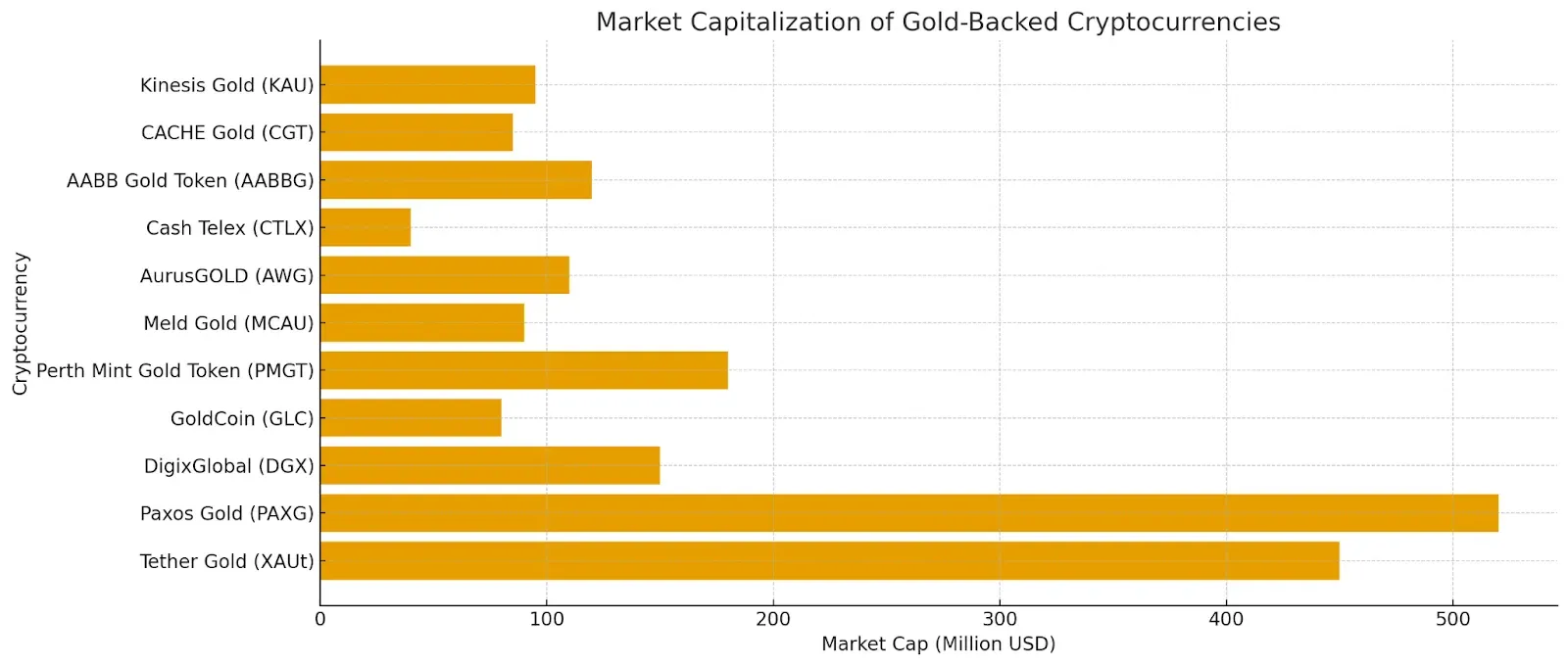
When a company issues a gold token, it usually deposits an equivalent amount of physical gold into a secure vault. Independent auditors confirm the gold exists, ensuring the token isn’t just a shiny digital illusion. There are a number of reliable tokens that have passed expert review, among them Paxos Gold (PAXG) and Tether Gold (XAUt). They lead the market and are most widely adopted and trusted.
On-chain, each token represents a claim to that physical gold. So, theoretically, you could redeem your tokens for real gold. The mechanics vary by platform: some let you redeem, others are purely digital. But the principle stays the same: your token is tied to real-world gold.
You invest in a stable asset and thus strengthen the reliability of your portfolio. For centuries, gold has been valued all over the world, and during a crisis, the asset is able to protect against unnecessary losses and risks.
Picking Your RWA Token
When it comes to gold-backed tokens, each project takes a different approach. PAXG and XAUt sit at the top of the market for one simple reason: transparency. Both are issued by well-known U.S. companies, backed by allocated gold bars, and supported by regular third-party audits. PAXG tends to dominate in DeFi, while XAUt is the go-to choice for users who prefer deep liquidity on major exchanges.

Other players cover more specific niches. DigixGlobal (DGX) was an early pioneer of gold tokenization and built its reputation on detailed reporting, though its trading volume is much lower today. Perth Mint Gold Token (PMGT) takes a different route entirely: it’s tied to a government-backed mint, offering a conservative, highly regulated option. Reliable, but not as widely available.
Then there are hybrid models like AurusGOLD (AWG), which pools gold from multiple providers and spreads custody risk across several vaults. It’s an interesting angle for diversification, but it doesn’t match the market leaders in terms of liquidity or exchange support.
At the end of the day, the choice comes down to four factors: transparency, custody and insurance, physical redemption options, and liquidity. PAXG and XAUt lead across most categories, PMGT stands out for government backing, DGX for its reporting history, and AWG for its multi-provider structure. A bit of due diligence up front helps ensure the token you’re buying is truly worth its weight in gold.
Stop grinding with tiny accounts. Pass the Hash Hedge challenge and unlock up to $100,000 in real funding — finally trade with real weight.
Your strategy, our capital, zero personal risk.
How Does It Work
Each token represents a fixed amount of physical gold stored in a secure vault — typically anywhere from 1 gram (DGX, AWG) to 1 troy ounce (PAXG, XAUt, PMGT). Some issuers peg their tokens to full bars for institutional scale, while others offer small-unit tokens so retail buyers can stack gold gradually.
The beauty of it is the flexibility. You can buy tiny fractions of a gram, trade tokens on crypto exchanges, or even use them in DeFi protocols to earn a yield. In short, it’s gold with the speed and accessibility of crypto.
Some Words About RWA Risks
Sure, gold tokens sound perfect, but nothing’s risk-free. Keep these in mind:
- Counterparty risk. The issuer must actually hold the gold. If they mismanage it or worse, commit fraud, you could be out of luck.
- Regulatory uncertainty. The crypto-gold crossover is still a new frontier. Laws differ by country, and regulations may change.
- Price swings. Gold is stable compared to most cryptocurrencies, but it still fluctuates. Token prices track these swings.
The Takeaway
Gold-backed crypto tokens are a fascinating fusion of old-school stability and digital-age convenience. They make gold accessible to anyone. Whether you’re looking to hedge against volatility or just diversify, these tokens offer a unique entry point into the world of stable metals.