What Is Crypto Trading?
It involves the process of analyzing and buying/selling operations with cryptocurrency. Many traders use technical analysis, different chart tools, and patterns to predict the time to sell and buy.
But the basis here is not in this process, but in the answer to the question: why are you doing this? Most of the people who chase profits lose in the crypto market and come out with a loss. The most difficult thing is to stay on a long-term period and turn positive. You already understand that this is very different from the traditional asset market, which rarely loses tens of percent per day.
Key elements of the crypto market:
- Exchanges — digital marketplaces like Binance, OKX, Coinbase, or Bybit, where buyers and sellers meet.
- Order types — market orders execute instantly at the best price; limit orders execute only at a specific price; stop orders help manage losses.
- Liquidity — the ease of buying or selling without major price slippage. Highly liquid pairs (e.g., BTC/USDT) trade millions daily.
- Volatility — rapid price changes, often larger than in traditional assets. Volatility attracts traders but demands strict risk control.
Main Types of Crypto Trading
Each trading style fits different experience levels, risk appetites, and goals. Let’s explore more about strategies and how to use them.
- Spot Trading. You buy and hold a cryptocurrency directly, hoping its value increases. It’s the simplest and most beginner-friendly type — no leverage or liquidation risks.
- Margin Trading. You borrow funds to increase your position size, magnifying both profits and losses. For instance, trading with 5x leverage means a 10% price change equals a 50% gain or loss. Margin trading requires discipline and a solid risk strategy.
- Futures and Derivatives. Traders speculate on future prices using contracts rather than owning assets. Platforms allow both long (price increase) and short (price decrease) positions. This market is large, so in 2025, crypto derivatives accounted for over 65% of all trading volume.
- P2P and OTC Trading. Peer-to-peer (P2P) platforms connect buyers and sellers directly, while OTC (over-the-counter) trading handles large institutional orders outside exchanges. Both offer privacy and flexibility but require trust and security checks.
- Arbitrage. This strategy exploits price differences across exchanges. For example, buying Bitcoin at $100,950 on one exchange and selling it for $102,400 on another. Arbitrage opportunities are smaller today due to automated bots but still exist in low-liquidity markets.
Want to test new trading strategies without putting your money on the line? With Hash Hedge, you can. It’s one of the top prop trading platforms built for serious traders.
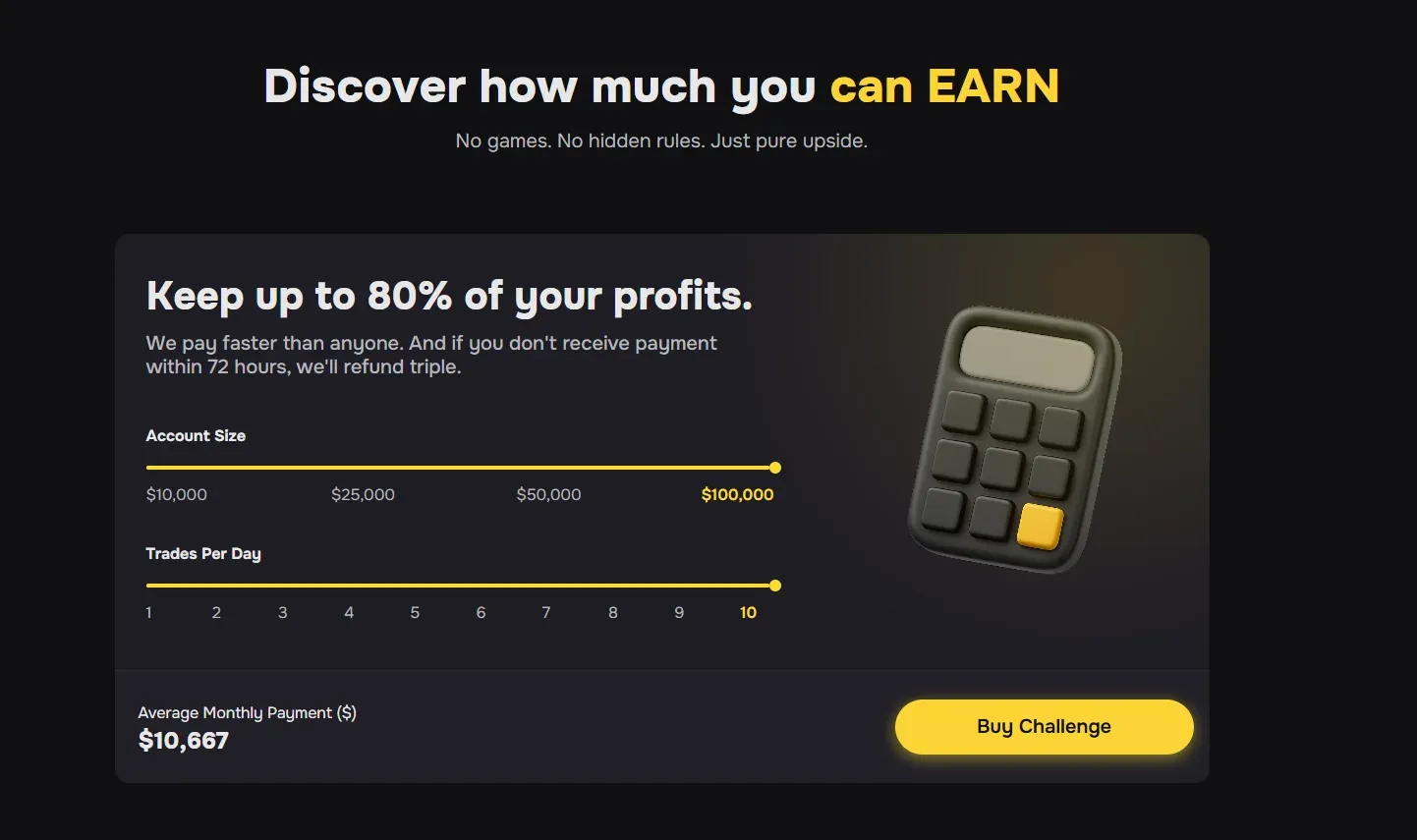
Pass the challenge, get funded with up to $100,000, and trade your strategy — zero personal risk.
| Type | How It Works | Best For | Notes |
|---|---|---|---|
| Spot Trading | Buy and hold crypto directly, waiting for price growth. | Beginners, long-term holders | Simple, no leverage or liquidation risk |
| Margin Trading | Borrow funds to amplify position size | Experienced traders | High risk, profits and losses multiply |
| Futures & Derivatives | Trade contracts predicting future prices (long/short). | Active and professional traders | Complex instruments — 65%+ of 2025 crypto volume |
| OTC Trading | Trade directly with others or through large private deals. | Institutions, privacy-focused traders | Requires trust, security, and counterparty checks |
| Arbitrage | Profit from price gaps between exchanges. | Fast, tech-savvy traders | Margins shrinking — automation dominates |
Common Trading Strategies
What is the difference between trading and gambling? Attitude. It is important to understand that there are a million strategies; we will analyze only the most used ones.
- Day Trading — multiple trades per day, aiming to profit from short-term volatility. Requires active monitoring and technical skills.
- Swing Trading — holding positions for days or weeks, targeting larger price swings. A balance between activity and patience.
- Scalping — making dozens or hundreds of micro-trades within hours. Demands high focus and fast execution.
- Position Trading — long-term holding based on fundamentals, often months or years. Suits investors who trust the project’s value.
- Algorithmic Trading — using bots or scripts to automate orders based on coded strategies or indicators.
Yet, no tool is more powerful than capital itself. Access professional funding with Hash Hedge — up to $100,000. Scale your strategies without risking personal capital.
Tools and Platforms for Crypto Traders
There’s a full ecosystem built around traders today — packed with advanced tools, real-time data, and automation that makes trading faster.
- Exchanges: Binance, OKX, Kraken, Bybit, Coinbase.
- Portfolio trackers: CoinStats, CoinMarketCap, Zapper.
- Charting platforms: TradingView, Coinigy.
- Data aggregators: Glassnode, Santiment, Messari (on-chain analytics).
Yet, no tool is more powerful than capital itself. Access professional funding with Hash Hedge — up to $100,000. Scale your strategies without risking personal capital.
Wrapping It Up
Here’s the takeaway: making money with crypto isn’t easy — and it’s not supposed to be. It’s a mix of knowledge, planning, risk control, and emotional discipline. You need to understand what you invest in, stay aware of market cycles, and never chase hype.
Protect your capital, and think about your mindset as much as your strategy. Because in crypto, your emotions often trade before your hands do. The more you treat it like a business — with patience, structure, and consistency, the more it starts to pay.