What Is VWAP?
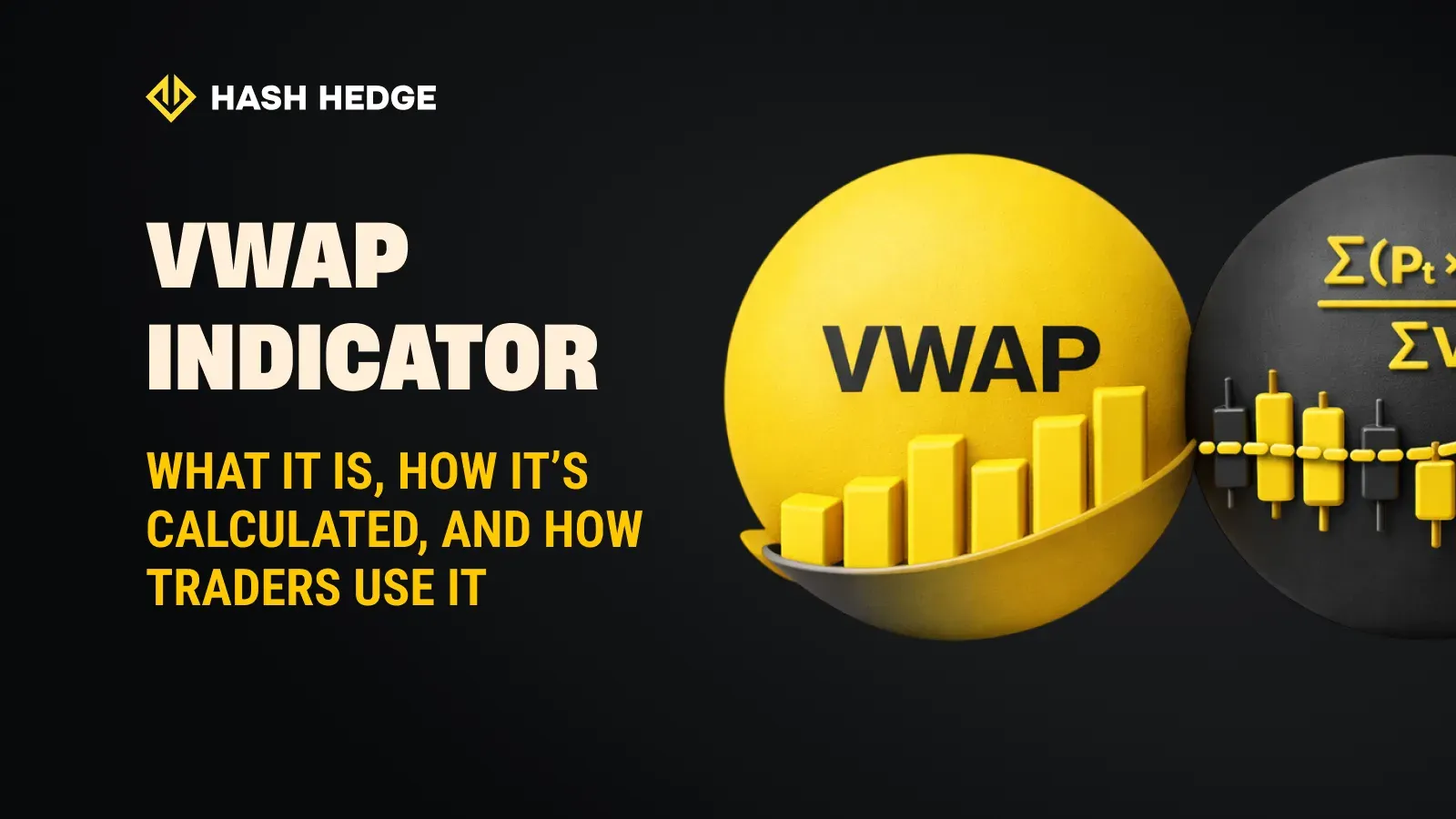
VWAP is a volume-weighted average price calculated using trading volume. Unlike a simple average price, where each data point carries equal weight, VWAP assigns more importance to price levels where a larger volume was traded. This allows traders to account for actual market participation rather than price movement alone.
At its core, VWAP answers a straightforward question: at what price did the market truly trade during a given period? Most often, that period is a single trading session. In some cases, however, VWAP can be calculated from a specific starting point, such as the beginning of the week or a major market event. The key principle remains the same—VWAP is time-dependent and not a continuous indicator.
When a new trading session begins, the VWAP calculation resets. This distinguishes it from most traditional indicators and defines its primary use case. VWAP is not designed for long-term trend analysis and is not used to determine the market’s broader direction. Its purpose is to provide a reference within the current trading period.
It’s also important to understand that VWAP is not a “fair value” in an abstract sense. It reflects an average price weighted by volume over a specific time window. As market conditions change, VWAP values can vary significantly from day to day, even if the instrument trades within a similar range.
For this reason, VWAP should be viewed as a contextual analysis tool. It helps determine whether the current price is above or below the average level of trading activity but does not generate standalone buy or sell decisions.
How VWAP Is Calculated
The VWAP formula is straightforward: the sum of price multiplied by volume is divided by total volume. Despite its simplicity, the calculation has important implications for how the indicator should be interpreted.
VWAP is recalculated continuously as new trades occur. Large trades have a much greater impact on the value than small, isolated transactions. This is why VWAP reflects real trading activity rather than a time-based price average.
To interpret the indicator correctly, it’s essential to understand how VWAP works in practice. Its value builds progressively as trades accumulate from the start of the selected period. VWAP does not react instantly to price changes—it only moves when volume enters the market. This behavior explains why sharp price moves without significant volume often have little effect on the indicator.
Why VWAP Matters to Institutional Participants
For institutional market participants, VWAP is more than just an indicator—it is an operational benchmark built into the trade execution process. In institutional trading, the primary challenge is size. Large positions cannot be opened or closed with a single order without affecting price, especially in instruments with limited liquidity.
As a result, trades are executed gradually through a series of orders spread over time. In this environment, the VWAP indicator serves as an objective reference point. It allows traders to compare their execution price to the volume-weighted average price traded during the session.
In institutional trading, VWAP is often used as a benchmark for execution quality. A purchase executed below VWAP is considered better than the market average for that period, while a purchase above VWAP is viewed as less efficient. The same logic applies to sell orders. VWAP does not generate signals—it performs a measurement function.
VWAP is also widely used in algorithmic trading. Many execution algorithms are designed to track or reference VWAP, aiming to reduce market impact and minimize deviation from the average traded price. In this context, VWAP in trading functions not as an analytical tool but as part of the execution infrastructure for handling large volumes.
How Traders Use VWAP in Practice
In retail trading, VWAP is most commonly used as a reference for evaluating current price levels. The position of price relative to VWAP helps determine whether the market is trading at a premium or at a discount to the session’s average.

In practice, traders use VWAP in several common ways: to assess market context before entering a trade, as a dynamic area where price may slow down or consolidate, and as a filter that helps avoid trades against the intraday market structure.
In some situations, VWAP is also treated as a dynamic support and resistance level. This is not a fixed price level but rather a zone where price behavior often changes. VWAP support and resistance tend to be most visible in liquid markets and during periods of elevated trading activity, when volume is distributed more evenly.
VWAP is rarely used in isolation. Most traders combine it with price action, volume analysis, and an understanding of overall market structure.
Looking to get more out of the market? Hash Hedge gives traders access to 170+ cryptocurrencies and up to 5X leverage — a format that works not only in fast moves, but also in sideways market conditions.
VWAP Strategy in Trading
When discussing a VWAP strategy, it’s important to clarify that this does not usually refer to a rigid trading system with strict entry and exit rules. In most cases, a VWAP strategy represents a decision-making framework where the indicator serves as a reference for price and market context.
In practice, a VWAP strategy often focuses on whether price is trading above or below the volume-weighted average. Traders use this information to avoid entries in unfavorable zones and reduce the likelihood of trading against the prevailing intraday structure.
Attempts to turn a VWAP strategy into a purely mechanical system based solely on price crossovers generally lead to inconsistent results. Effectiveness depends on understanding the surrounding market conditions rather than treating the indicator as a signal generator.
VWAP vs. Moving Averages: Key Differences
Although VWAP may visually resemble a moving average, the logic behind these tools is different.
| Parameter | VWAP | Moving Average |
|---|---|---|
| Considers volume | Yes | No |
| Session-based | Yes | No |
| Primary purpose | Context and reference | Price smoothing |
| Typical use | Intraday analysis | Trend analysis |
VWAP in Cryptocurrency Trading
The cryptocurrency market has several characteristics that affect how VWAP should be used. Trading is continuous, there is no formal session structure, and liquidity can shift sharply throughout the day.
When using VWAP in crypto trading, it’s important to understand where the calculation begins, which exchange is being analyzed, and the broader market context. On liquid trading pairs, VWAP remains a useful reference, particularly for intraday trading and periods of heightened market activity.
Common Mistakes When Using VWAP
Despite its straightforward logic, the VWAP indicator is often misused. Many traders treat VWAP as a signal-based tool, expecting it to provide clear entry and exit points. In reality, VWAP is not designed to predict price direction—it reflects past trading activity.
Another common mistake is trading VWAP crossovers in the same way as moving average crossovers. This approach ignores the purpose of the indicator and often results in random trades without proper context.
Liquidity is another critical factor. VWAP in trading works best when volume is distributed evenly and reflects genuine market participation. On low-liquidity instruments or during quiet periods, VWAP can be distorted by isolated trades and lose its usefulness.
Traders also frequently overlook VWAP’s time dependency. A VWAP calculated from the start of the day and one calculated from an arbitrary point can produce very different reference levels. Ignoring this distinction leads to flawed analysis.
Finally, using VWAP in isolation is a mistake. Without considering price structure, volume behavior, and market phase, VWAP becomes little more than a line on a chart with limited analytical value.
Final Thoughts
VWAP is a practical indicator used not to generate trading signals but to evaluate context and price quality. Its primary strength lies in incorporating volume, which allows it to reflect real market activity within a defined period. This is why VWAP is widely used by both institutional and experienced retail traders.
It’s important to recognize that the VWAP indicator is not a universal solution. It does not replace market analysis, does not define a trading strategy on its own, and does not provide definitive answers. Instead, it offers a neutral reference point that helps traders assess price, execution conditions, and market behavior within a session.
In trading, VWAP is especially useful for intraday analysis and liquid markets where volume distribution matters. When applied thoughtfully and in combination with other analytical tools, it helps reduce subjectivity and supports more informed decision-making.