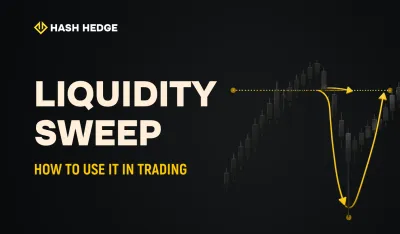
We Talk About Liquidity
Smart Money isn’t guessing where the price will go. They’re searching for liquidity — for clusters of orders sitting above highs or below lows. Every market move needs liquidity to fill large positions, and retail traders unknowingly provide it.

When you buy a breakout, someone needs to sell into your buy. When you panic sell at a low, someone needs to buy your exit. That “someone” is often the institutional side of the market.
The concept may sound cynical, but it’s simply how markets operate. Institutions can’t move millions in and out of positions quietly — they need retail traders to provide the volume. So they target liquidity pools, sweep stop-losses, trigger emotions, and then move the market the way they intended all along.
The truth behind the market.
What Is Liquidity Engineering?
Liquidity engineering is the silent architecture of every market move. It’s the invisible mechanism behind sudden wicks, fake breakouts, and those “unfair” reversals that liquidate thousands in seconds. In such a way, institutions create movement by forcing others to react. Each spike and drop is a calculated extraction of liquidity.

Retail traders often think they’re fighting the market. In truth, they’re providing the liquidity that fuels it. Every stop-loss is a transaction waiting to be harvested, every emotional entry a gift to those who wait. So, Smart Money understands this. They know the game is about positioning around liquidity.
If you’re ready to stop being the liquidity, Hash Hedge gives you the capital and tools to think like Smart Money. Trade over 160 crypto pairs, use a professional terminal, and get up to $100,000 in funding for your strategy.
How Institutional Traders Use Charts
One of the core elements of Smart Money Concepts is order blocks — areas on the chart where large institutional positions are likely to be opened. They’re typically seen as the last bullish or bearish candle before a sharp impulsive move.
When you see a strong move with clear direction and volume, it didn’t start by accident — it likely began at an order block. The difference lies in context — understanding where the liquidity was taken and whether the market structure shifted afterward.
Think of it this way: order blocks are footprints of intent.
How Institutions Think
Institutions are obsessed with getting paid. They wait for the market to come to them — to reach zones of interest where they can act efficiently.
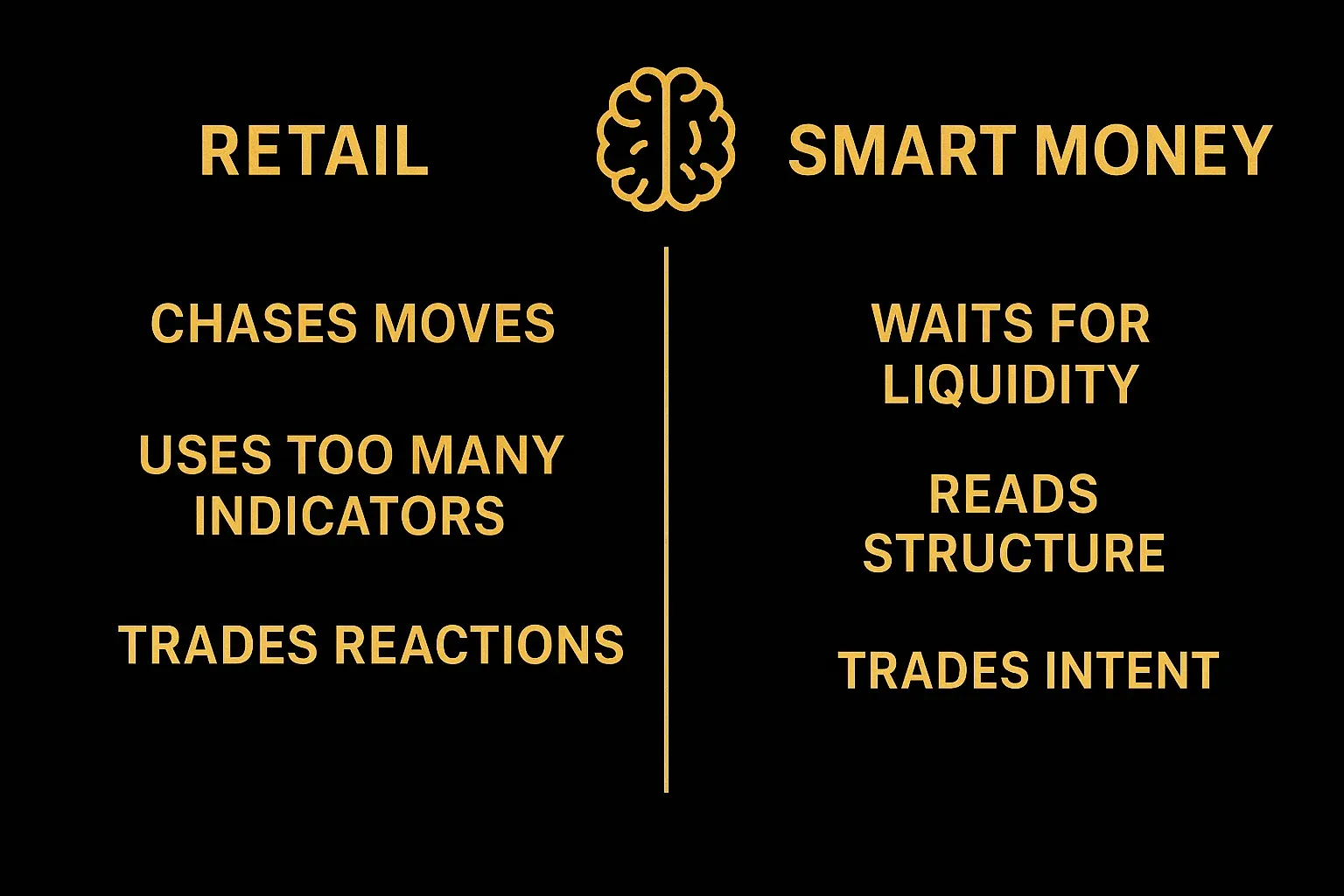
They don’t chase candles or FOMO into breakouts. They let the market induce retail traders into bad entries, creating the liquidity they need. Then they enter, often against the crowd, and hold through the noise. This mindset is what separates professionals from emotional traders.
What Institutional Traders Actually Look At
Most institutions care about:
- Liquidity zones.
- Market structure shifts (breaks of major highs/lows confirming intent).
- Premium and discount zones for using price ranges to find value.
- Time and volume to understand when and how liquidity appears.
That’s it. No secret algorithm, no prediction model. Just structure, patience, and the ability to think in probabilities.
How to Think Like Smart Money?
Most traders focus on entries. Smart Money focuses on context. Start by observing where liquidity is before thinking about direction.
Ask yourself:
- Who’s trapped?
- Whose stops are about to get hit?
- Where would large players need to enter or exit?
Before taking any position, professionals study where liquidity lies — because that’s where price will move next. Markets always move toward liquidity to fill large orders efficiently.
Retail traders often mistake these moves for manipulation, but what’s really happening is liquidity engineering. The market hunts the easiest liquidity first — stop-loss clusters, breakout chasers, and emotional entries. Once that liquidity is consumed, the price reveals its true direction.
Common Myths About Smart Money Concepts
Let’s clear a few things up:
- Smart Money isn’t always right. They lose too, just less often and with better risk management.
- SMC is a framework for understanding intent.
- It’s not manipulation.
- It’s not new. These concepts existed long before socials turned them into buzzwords.
Turning Knowledge Into Edge
So how can you apply this without overcomplicating your charts?
- Mark liquidity highs and lows.
- Note where the market sweeps liquidity, then reverses.
- Track order blocks with a change in structure.
- Journal these moves; spot patterns in timing and volume.
Over time, the market stops looking random and starts feeling like a story being told in price.
Final Thoughts
A solid trading plan translates Smart Money Concepts into action. It gives structure to how you analyze price, control exposure, and adapt to shifting conditions. Keep it straightforward — focus on structure, liquidity zones, and confirmation before every move.
The strength of Smart Money trading lies in discipline. When your routine is consistent and your rules are clear, trading stops being about guessing direction and starts being about reading intent. Think about it more.