Step 1. Stop Trading “However It Feels”
The first thing any crypto prop trading firm looks at is basic discipline. Can you trade by the rules and stick to them even when the market tempts you into unnecessary actions?
For a prop model, it’s critical that a trader:
- Uses fixed risk per trade.
- Defines stop-losses in advance.
- Does not increase size after losing trades.
- Understands when it’s better not to trade at all.
At this stage, it doesn’t really matter whether you’re making a lot or a little. What matters is how repeatable your actions are. Prop firms usually aren’t looking for brilliant ideas, they’re looking for predictable behavior within risk limits.
If a trader can’t follow basic rules on a small personal account, they almost certainly won’t be able to do it with company capital. That’s why this first step is so important.
Step 2. Get Your Stats in Order
For a prop model, numbers come first. You might feel confident that your strategy “works overall,” but without data, that confidence doesn’t carry much weight.
Before thinking about funded crypto trading programs, you need to clean up your core analytics:
- Keep a trade journal, not just terminal history.
- Understand your win rate and average R/R.
- See which setups actually generate profits and which drag results down.
The strategy in your head and the strategy in your stats are often two different things. Sometimes winning trades are overestimated, losing streaks are underestimated, or trading costs are simply ignored.
Prop firms don’t expect perfect equity curves. But they do expect traders to understand their numbers and explain where profits come from and where the strategy is vulnerable.
Good statistics are a tool. They help you see in advance whether you’re ready for crypto prop trading, or whether the foundation still needs work.
Step 3. Eliminate Hidden Costs
At this stage, many traders suddenly realize why their results fall short of expectations even when their trading seems correct. The issue is usually not the setup or market direction, but hidden costs that were never fully accounted for.
This includes things that are easy to ignore:
- Fees.
- Slippage.
- Spreads.
- Execution quality at different market hours.
For traders aiming to pass a crypto trading challenge, this becomes critical. Challenges leave very little room for error. A few extra points of slippage or an overlooked fee can quietly push you closer to a daily loss limit or max drawdown.
That’s why at this stage it’s important to:
- Rethink trade frequency.
- Identify instruments and trading hours with the worst execution.
- Honestly assess where money is lost because of conditions, not ideas.
A trader who controls costs gains a serious edge. In crypto prop trading, this often makes the difference between consistent passes and repeated failures with no obvious cause.
Step 4. Choose the Right Prop Model and Challenge Format
Once discipline is in place, stats are clear, and costs are under control, it’s time to choose. This is where many traders make a common mistake, focusing only on the numbers in ads.
Capital size, profit splits, and fast-growth promises grab attention, but they rarely say much about the quality of the model itself. For traders thinking long-term, other factors matter more.
When choosing a prop firm for crypto traders, pay attention to:
- Transparent conditions with no fine print.
- Clear logic behind risk limits.
- Reporting and statistics quality.
- Reasonable requirements within a crypto trading challenge.
A good prop model shouldn’t force you to guess rules or adapt to strange restrictions. Instead, it creates an environment where disciplined traders can show consistency.
It’s also important that the challenge format fits your style. If your strategy is active, overly strict limits on trade count or time can get in the way. If you trade less frequently but carefully, aggressive profit targets can add unnecessary pressure.
Choosing a prop model isn’t about finding the “best deal.” It’s about finding the right format.
Step 5. Pass the Crypto Trading Challenge
The purpose of a crypto trading challenge is simple: to see whether you can follow rules and stay composed under pressure.
At this stage, many traders rush unnecessarily. They feel the urge to:
- Hit profit targets faster.
- Push the day after a good trade.
- Recover losses immediately.
Paradoxically, the most consistent passes often look boring. Small gains, controlled losses, no sharp moves. And that’s exactly the style that tends to work.
If you treat the challenge not as an obstacle but as a normal trading environment, your chances of passing increase significantly. This step tests not the strategy, but your ability to stay consistent.
Step 6. Working with a Funded Account
After passing the challenge, the most important and most difficult stage begins: real work with a funded trading account. At this point, there’s no need to prove that you can trade. That’s already assumed.
The main task now is to maintain consistency. Many traders mistakenly think that once they have capital, they can trade more freely. In reality, discipline has to become even tighter.
Trading with company capital requires:
- A calm attitude toward drawdowns.
- Focus on series of trades, not individual outcomes.
- Strict risk management.
- No attempts to force faster profit growth.
At this stage, traders often experience a psychological shift. Every trade feels more significant than before. If this isn’t controlled, emotions creep in and mistakes follow.
A professional approach is to treat a funded account as a working tool, not a one-time chance to make a big score. This mindset is what leads to long-term relationships with prop firms and real scalability.
Final Takeaway: 90 Days of Systematic Work
Becoming a funded trader in 90 days is realistic. But it’s not about luck, secret indicators, or perfect entries. It’s about consistency.
Ninety days means:
- Structured discipline.
- Clear statistics.
- Cost control.
- The ability to work within rules.
- A calm approach to results over time.
Traders who follow this path consciously enter the prop model without illusions. They understand that stability matters more than sharp spikes, and control matters more than emotion.
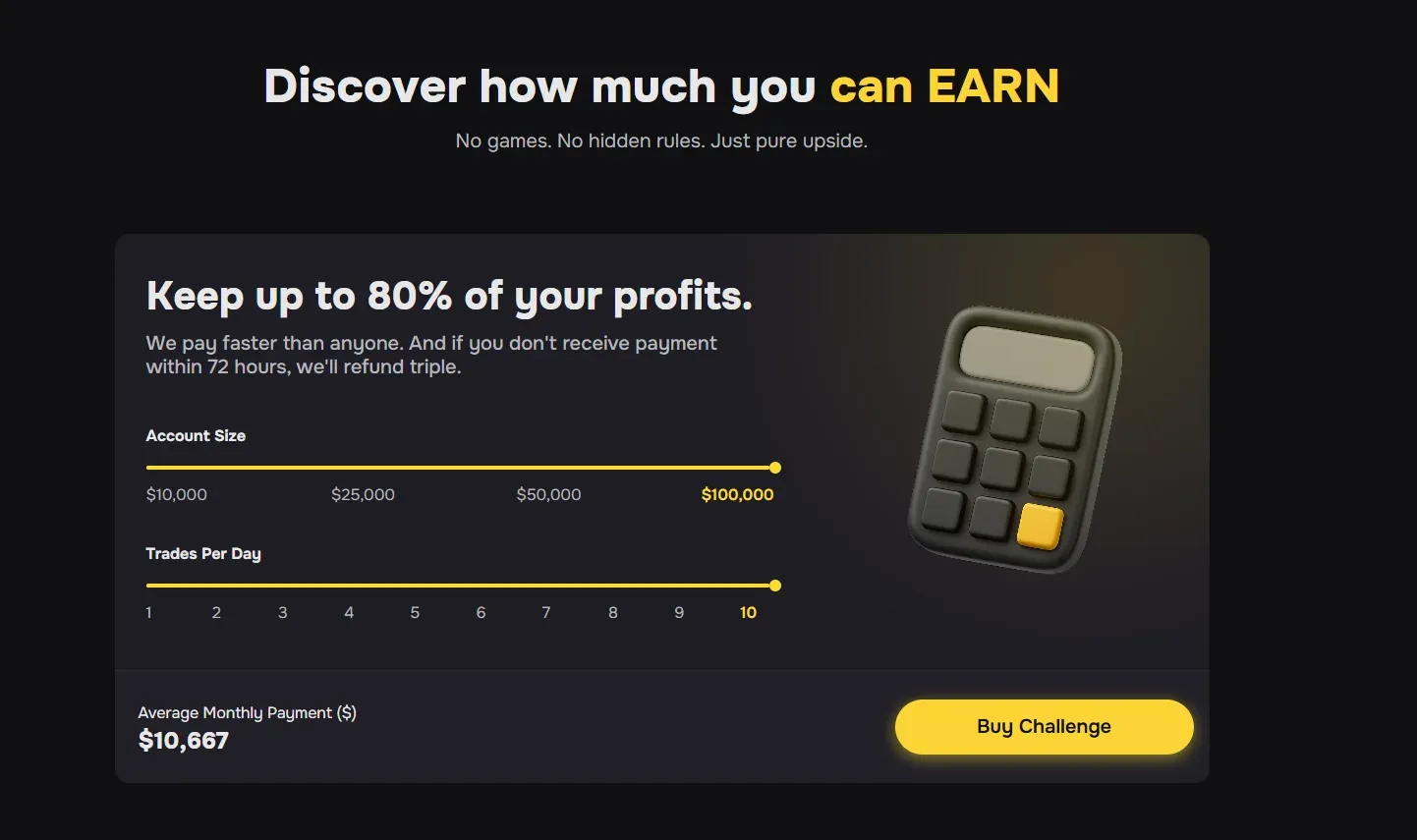
If your goal is to get a funded trading account and trade with company capital, the logical approach is to move step by step. And if you’re ready to test yourself in real conditions, you can always start trading with Hash Hedge and see how your trading measures up to prop model requirements.