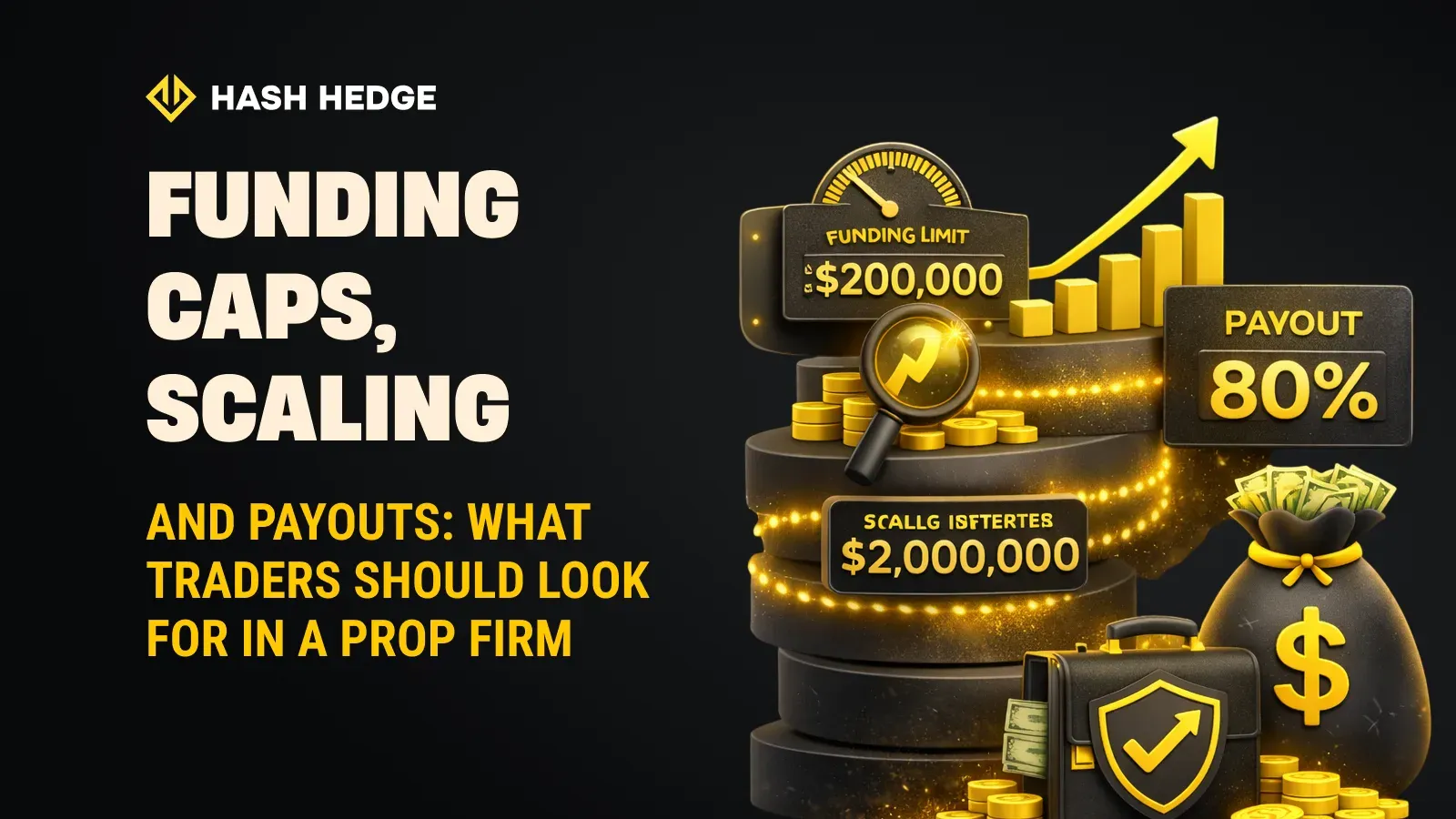
What Is a Funding Cap and Why It Matters More Than the Starting Balance
A funding cap is the maximum amount of company capital a trader can work with within a prop model. This parameter is often underestimated, especially at the beginning.
When choosing a prop firm, traders almost automatically focus on the starting balance. $10,000, $25,000, $50,000 — it feels like that’s where the journey begins. But the starting point is just an entry. What matters far more is where that path can realistically lead.
If a prop firm doesn’t have a clearly defined funding cap or if it exists only on paper growth quickly hits a ceiling. A trader can show consistent results, follow risk rules, pass all stages, and still remain stuck at the same capital level. In that kind of model, motivation tends to fade over time.
Funding caps matter for several reasons. First, they show whether the firm is genuinely interested in a trader’s growth, not just in testing them. Second, they define the planning horizon. Traders begin to understand whether it makes sense to build a long-term trading process or whether the model is designed for short cycles.
There’s also a psychological aspect. When traders see a clear and achievable growth limit, trading becomes calmer. The goal stops being abstract, and discipline stops being an end in itself. Instead, it turns into a tool that’s directly connected to scaling.
Scaling: Capital Growth or Growing Pressure
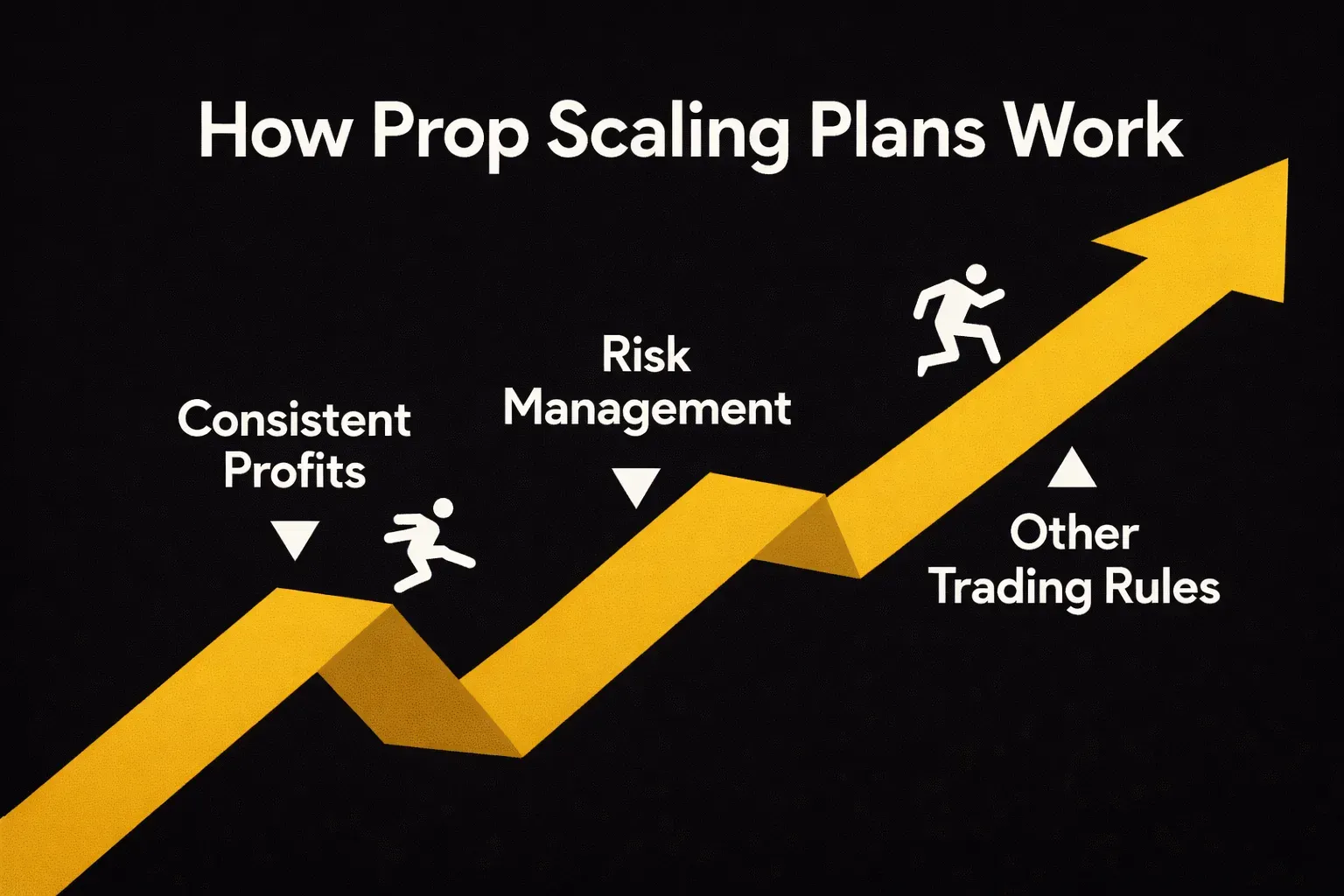
On paper, scaling in prop trading sounds simple: trade consistently and receive more capital. In reality, this stage often changes trader behavior and not always for the better.

The issue is that capital growth almost always comes with increased psychological pressure. Trades start to feel more important, drawdowns hit harder, and mistakes become more expensive. If the scaling system isn’t well designed, traders may gradually and unintentionally change their trading style.
Good scaling plans focus not only on profits, but also on trading quality. They usually account for consistency over time, adherence to risk limits, and behavior during losing periods, not just performance during profitable ones.
Poor scaling models work differently. They push traders to speed things up: take more trades, increase risk, force results.
For traders working with company capital, this is especially dangerous. Instead of calm, repeatable execution, pressure builds around performance and pressure almost always degrades decision-making quality.
In a well-structured prop model, scaling is a consequence of discipline. Capital increases gradually and logically: first stability is confirmed, then responsibility grows, and only after that does the next level follow.
Payout Systems: How and Why Traders Get Paid
Payouts are one of the most sensitive topics in prop trading. Payout systems vary widely between firms, and it’s important to look beyond profit split percentages.
Traders should pay attention to:
- Payout frequency.
- Withdrawal conditions.
- How payouts are tied to rule compliance.
- Transparency of calculations.
A high profit split alone guarantees nothing if the payout system is complex, unclear, or tied to additional conditions. For traders working with a funded trading account, it’s critical to understand when and under what conditions profits actually become real.
Common Traps: When the Numbers Look Good
One of the most common mistakes when choosing a prop firm is comparing offers only by headline numbers. Large starting balances, high profit splits, and fast growth all look attractive and create the impression of a favorable model. But by themselves, these figures say very little about how the system actually works.
Problems begin when the internal logic of the model isn’t balanced. An account size may look impressive, but risk limits can be so tight that a normal losing streak starts to feel like a threat. Or scaling technically exists, but happens so abruptly that traders are forced to change their style just to keep up with capital growth.
Payouts are another risk area. High profit splits are often used as the main selling point, while withdrawal conditions are tied to formal requirements that have little to do with actual trading quality. As a result, traders may appear to be working in a generous model, yet constantly feel uncertainty, one set of conditions today, another tomorrow.
That’s why attractive numbers without a clear and logical structure aren’t an advantage. They’re a reason to ask more questions. In long-term work, what matters far more to a trader is whether they can trade comfortably and predictably within the system.
Final Takeaway: What Traders Should Really Look At
In short, when choosing a crypto prop trading firm, traders should ask themselves a few simple questions:
- Is there a clear and achievable funding cap?
- Is scaling structured logically?
- Are payout systems transparent?
- Does the model help you trade more consistently, not just faster?
For traders planning to work with company capital long term, these factors matter far more than starting numbers. And if you want to test yourself in a model with clear rules and transparent logic, you can always start trading with Hash Hedge and see how those conditions work in practice.