What is considered a breakout and why it attracts retail traders
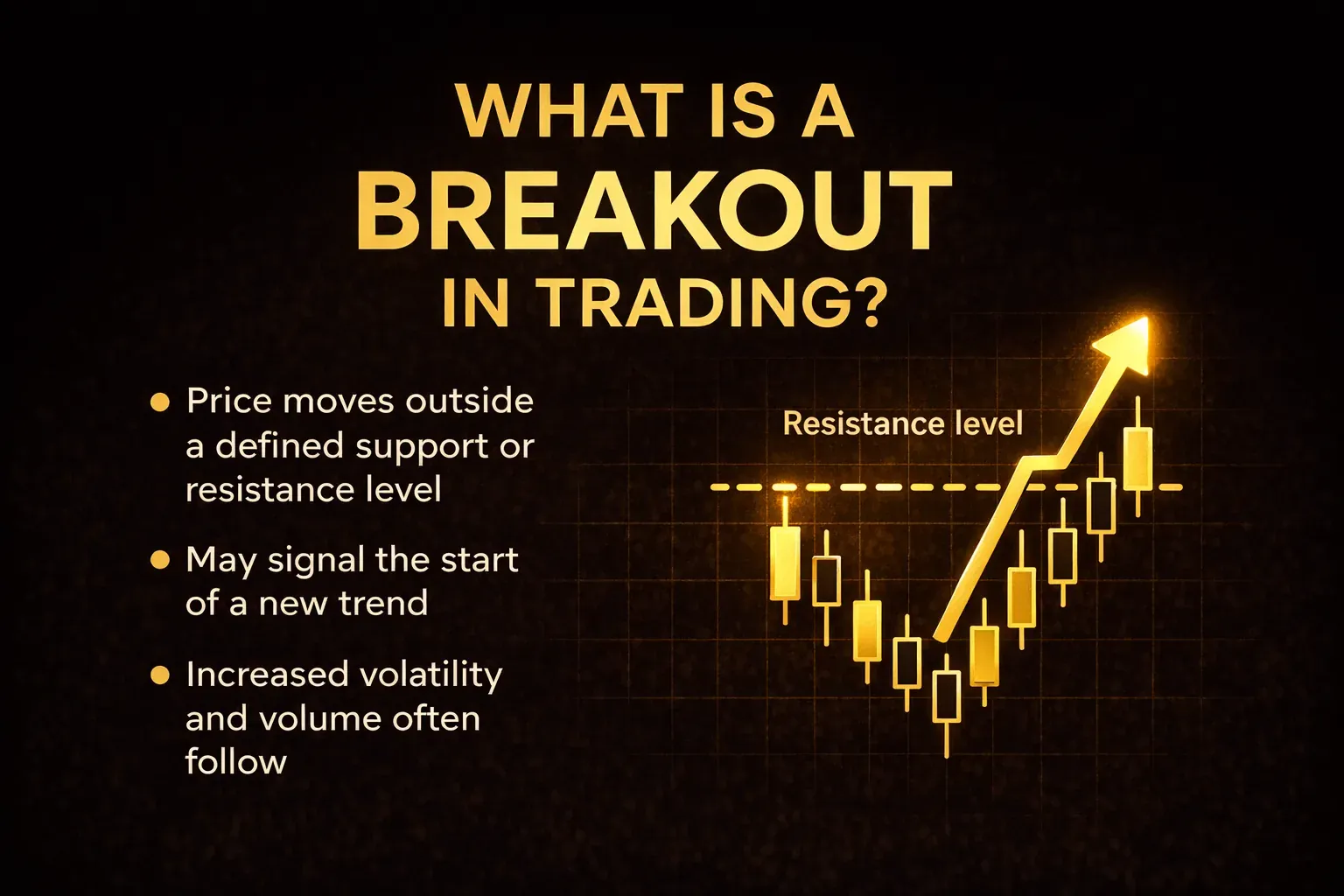
In the classic sense, a breakout is when price moves beyond a support level, resistance level, or the boundary of a range with the expectation of continuation. For a retail trader, this looks like confirmation of market strength: the level is broken, resistance is cleared, and space for movement is open.
As a result, entering on a breakout is perceived as a logical and simple decision. It does not require complex analysis, does not involve waiting, and psychologically feels like active participation in the move.
The problem is that the market clearly sees where most traders open positions and uses this predictability.
Why most breakouts turn into false breakouts
From a market structure perspective, a breakout is an event, not a direction. It shows the fact of price moving beyond a level, but it does not explain who controls the move or where large participants’ interest is.
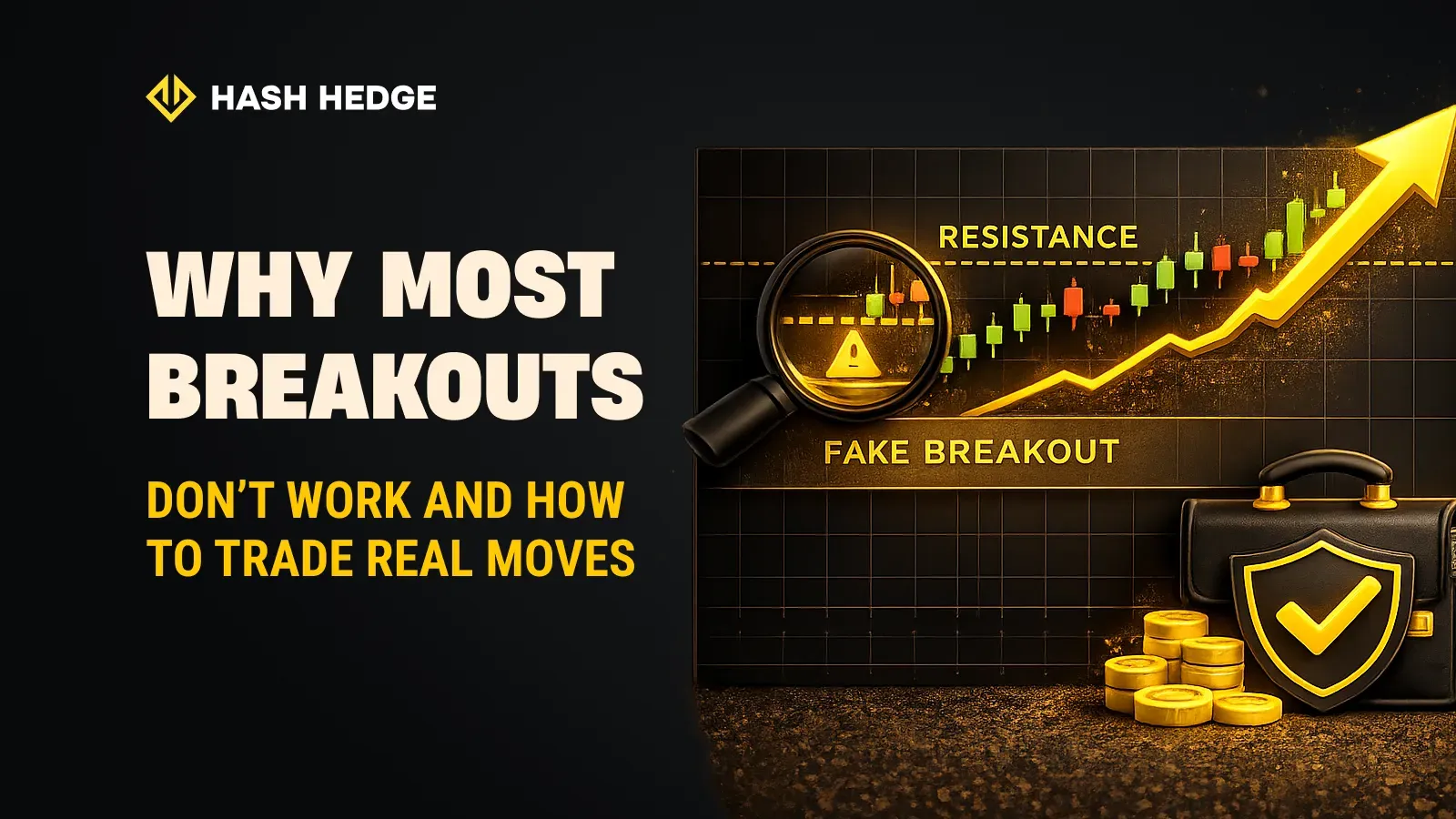
In many cases, a breakout coincides with a liquidity grab. Behind support and resistance levels, stop-losses and pending orders are usually clustered. When price moves beyond the level, this volume gets activated. For the market, this is a convenient way to access liquidity.
As a result, the trader enters a position at the moment when the market:
- Finishes a liquidity sweep.
- Takes retail stops.
- And only after that decides on direction.
Visually, this looks like a false breakout. Inside the structure, it is a normal phase of volume redistribution.
How the market uses breakouts to work with liquidity
In practice, the same pattern repeats. Price approaches a level, tension builds, and expectations of a breakout form. Volume increases, volatility rises. At the moment price moves beyond the level, retail traders actively enter positions, and stop-losses from previous trades are triggered.
At this point, a stop hunt takes place and volume is formed that allows large participants to open or close positions. After that, price often returns back into the range.
This entire process is a direct result of how predictable retail behavior is.
Where false breakouts most often occur
False breakouts most commonly form:
- At obvious support and resistance levels.
- Near the boundaries of trading ranges.
- During news-driven impulses.
- In periods of reduced liquidity.
In all of these areas, liquidity zones are usually concentrated, and the market uses the breakout as a tool to access that volume. The more obvious the level, the higher the chance that stop orders are clustered behind it.
Why volume does not always confirm a breakout
Many traders use volume confirmation as a filter. The logic is simple: if volume is increasing, money is entering the market. However, volume often increases precisely because stop-losses and pending orders are being triggered.
In such moments, volume reflects not the strength of direction, but the intensity of order execution. These are fundamentally different things. That is why volume confirmation without context often creates a false sense of reliability.
The role of trading channels and market structure
When the market is viewed through the lens of trading channels and ranges, it becomes clear that many breakouts happen inside a larger structure. Price breaks a local level but remains within the higher timeframe range.
In these situations, the breakout does not mean the start of a trend. It means the market tested the range boundary and took liquidity. Without understanding structure, a trader sees every move beyond a level as a signal. With structure in mind, it becomes clear where a breakout makes sense and where it is simply part of range activity.
How to distinguish a real breakout from a false one
There is no universal filter. Only a combination of factors works.
First, market context matters: where price is relative to higher timeframes, and whether it is breaking a key area or a local level inside a range.
Second, the reaction after the breakout matters. Does price hold beyond the level? Is structure forming for continuation, or does the market immediately return back?
Third, liquidity matters. Often, sustainable moves begin only after a liquidity sweep has occurred and the market has taken stops.
Why patience matters more than speed
One of the most common mistakes is trying to enter the market at the exact moment of the breakout. Psychologically, this is understandable — there is a sense that the move will leave without you.
In practice, more stable entry points often form:
- After a return to the level.
- After structure forms.
- After the price is confirmed to hold.
This approach requires waiting, but it significantly reduces the number of entries into false moves.
Why breakouts matter even more in crypto prop trading
In crypto prop trading, the cost of a mistake is higher. Drawdown limits and daily loss rules leave no room for a series of low-quality entries.
Traders working through a prop firm for crypto traders and trading with company capital are forced to filter breakouts much more strictly. Entering every move quickly leads to rule violations.
That is why in prop trading, a breakout is not treated as a signal, but as an event that requires analysis: what exactly the market did with liquidity and why.
Common breakout trading mistakes
Even experienced traders regularly repeat the same errors:
- Entering on the first level break without confirmation.
- Ignoring higher timeframes.
- Overestimating the importance of volume.
- Chasing the move after an impulse.
- Having no plan for a return into the range.
All of these mistakes are united by the absence of work with context and liquidity.
Final Thoughts
Most breakouts don’t work because they are used for liquidity grabs. Price moves beyond the level, takes volume, and only then decides on direction.
A trader who understands this mechanic stops treating every breakout as an opportunity and starts choosing situations where the move actually makes sense.
If you want to work with breakouts in a systematic and low-stress way, it makes sense to do it in an environment where risk is limited by rules, for example, by starting to trade with Hash Hedge and using company capital.